The CAWLS reviewed Class Action in its November newsletter. Being recognized by the labour studies academic community is an important moment for the book. It is much appreciated.
Tag: education unions
Hastings-Prince Edward
Yesterday, I presented Class Action to the executive of my old local, the Hastings-Prince Edward ETFO local. It was like being with family. Finally, I was person-to-person with an audience. I gave a short presentation on the book, we talked, I signed books, they asked questions, we reminisced. I was given 15 minutes on the agenda, but we remained in discussion for 45 minutes. It was wonderful to be back home.

Last Tuesday, I had presented the book at the AGM of the Toronto Workers History Project via Zoom. It was like a book launch with soul mates. The panel consisted of Harry Smaller, professor emeritus at York U, and Vivian McCaffrey, former ETFO Coordinator of Communications and Political Action Services. Some of the questions Harry and Vivian put to me pushed me in directions that I had never considered. It was a learning experience, indeed.
The discussion that followed involved a (virtual) room full of labour activists asking some very insightful questions out of their experiences as activists, unionists, and students of labour history. The panel format that had been suggested by Craig Heron, TWHP President, allowed me to connect with the audience, even through Zoom, in a very personal way.
I am going to offer the same format for future presentations to any other organizations that ask, with the understanding that the panel members read the book in advance. Thank you Craig. Thank you TWHP. Thank you Harry and Vivian. I was honoured to be the AGM presenter for the evening.

Released
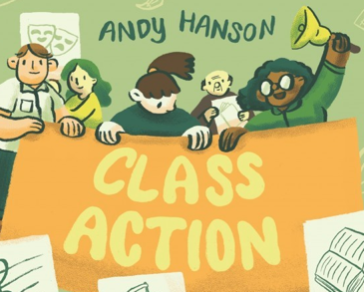
Class Action: How Ontario’s Elementary Teachers Became a Political Force is now available from your local bookstore or online from Between the Lines Publishing. The book was released on 15 September; the launch was delayed due to the federal election. Personally, I appreciated the opportunity given to people to read the book before the launch, which is now expected in the second week of October (TBA).
It has been an interesting few weeks emotionally for me, an identity shift.
Two seeks ago, I went into Another Story Bookshop to buy a graphic novel for my 7-year-old granddaughter. At the cash, I asked Anjula if they were carrying my book. They were. Anjula asked another clerk to take over while she talked to “an author.” I was taken by surprise. It was the first time anyone had called me that.
Walking home, I was feeling a lot of ambiguity. When I got to my house, I phoned Barb, a painter friend. I wanted to talk about the process of re-inventing myself. Barb had undergone a similar experience. “We all go through that,” she said. “You have to put in the time at your craft. You have to make time for the work, for others, and for yourself.”
After retiring from teaching, I had moved to Toronto. I had become friends with a couple of fellow writers, a videographer, and a sculptor. Yet, I had always felt an outsider. Now, having put in the time to become a published author, I belonged. I had achieved a kind of credibility in myself. The effect was expansive, exhilarating, and a little terrifying. Who was this re-invented person in the mirror?
Class Action: How Ontario’s Elementary Teachers Became a Political Force is also available at Indigo Books.
 Class Action